Uncategorized

Can I see your identification?

I’ve been rummaging about these last few days attempting to pull together a broken dissertation.  What began as a passion for discovering how ritual might be used to change organizations has… well, changed several times over the course of the last few years.  Then again, I’ve had a bit of a metamorphosis myself these last few years  – and I’m not referring to the gray hair.

Where my writing has finally settled is in looking at organizational identity, as well as organizational identification (yes, those are two separate things, and I’ve got the notes to prove it) and how organizational culture helps to shape and maintain that identity through ritual, amongst other things.

“Who do we say we are?” is a core question organizations ask of them selves.

“Who do they say we are?” is also important.

But deeper down are the other questions, the ones we dare not ask because we’re afraid of the answers.  How do we know who we are?  What informs that knowledge of the self?

I think about our congregations who on March 13th, 2020 could have told you exactly who they were… only to find on March 15th that their entire sense of identity had changed… and I think about building on rock and building on sand.

I wonder about congregations who moved easily into this new territory, even though it meant learning new technology, because their identity was focused not on a building, but on relationships with God and one another.

I’m inquisitive about those congregations who are halfway in the middle – with a core group of folks who made the move to online, as well as those who found their online attendance double that of what they’d see on a typical “in the building” Sunday.

I’m curious about congregations who have found themselves engaged in conversations regarding race, perhaps for the first time, and am wondering how that might change their identity.

My hope and prayer is that even as we begin to prepare for moving back into our buildings we take some time to discover what this wilderness time has said about our identity and what that might mean for us moving forward?

Finally, I always appreciate conversation partners around this sort of stuff.  I promise not to use you as a sermon illustration (although, you might end up somewhere in this dissertation!).
Give them Watts!

On June 9th my spouse and I celebrated thirty-years of marriage.  Our wedding picture shows us both in 18thcentury clothing – he in a white wig, and I dressed in a robe à la française (also known as a “sack back”).  We met as Revolutionary War re-enactors and fell in love at Old Fort Niagara… so this all made sense to us at the time (although it undoubtedly mystified a few neighbors).

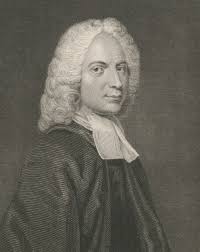
Isaac Watts

So, when I had a chance to preach at the Springfield Church in NJ, I jumped at the chance… although I did preach in my usual Sunday pulpit gown and not my 18th century kit.  This charming colonial church is the site of a famous tête-à-tête (French again!) between the British and the Continental forces.  Rev. James Caldwell, a Presbyterian pastor whose wife had been killed by the British at the Battle of Connecticut Farms, was at the Springfield church likely in his role as a military Chaplain.  

During the battle the Continentals ran out of the paper used to roll cartridges.  Rev. Caldwell reportedly ran into the church and grabbed some hymnals.  He threw them to the army shouting “Give them Watts’ boys”, referring to several of the hymns that were penned by Isaac Watts.   As a result, the Battle of Springfield was a Continental victory.   

There are a variety of reasons folks express concern about the mixing of politics and faith.  For some its based on confusion over the principle regarding the “separation of church and state” which prevents the State from endorsing any particular faith system.  Other folks will cite the Johnson Act[1].  But at its root I think we don’t like to mix politics and faith because it is messy.  It is also risky.

Rev. James Caldwell didn’t live long after his “Give them Watts’ boys!” moment: a Continental soldier who was rumored to have been bribed to kill the chaplain succeeded in doing so. 

Rev. Virginia Gerbasi was the victim of “tear gas” and flash bombs last week as she handed out water on the patio of St. John’s Episcopal in Washington, D.C.

Messy.  Risky.  

These are the sorts of actions that make folks uncomfortable, and we will do anything to avoid discomfort… including making our churches political safe zones.  Instead of engaging one another in difficult conversations about how faith impacts our understanding of politics, we silently agree not to discuss it.  

J. Herbert Nelson, the Stated Clerk of the PCUSA raises this question:  “How deep is our faith? How deep is our commitment to get into places we aren’t familiar with and proclaim the gospel?”

For Caldwell and Gerbasi the answer was clear, and messy and risky.

Where does your faith lead you?  What is your commitment to the proclamation of the Gospel?


[1] Churches and other faith groups are forbidden from endorsing political candidates by the IRS.  This doesn’t mean a church that does this will be arrested/sued/forbidden to meet, its intent is to limit the power of organizations that do not pay taxes to sway their population.

Whose Order?

Presbyterians are squirrely folk who lean heavily into the understanding that Order is important.  Some of us have even had bumper stickers on our cars that read “Decently and in Order!”.

Only me?  Okay, then.

There is something about order (logos!) being called out of chaos that appeals to my sensibilities.  I see it in the church even when we are even at our most disorderly – at Session meetings when emotions are high and in the way we debate the best use of resources.  Order occurs not because we insist on one way, but because we allow for discourse and discernment. We as a denomination have chosen to allow for lots of wiggle room even as we set parameters.  

Those parameters are our Confessions.

If you’re only familiar with the Apostles and Nicene Creeds, you need to dive into the others.  Three have been added to our Constitution in my lifetime: the Confession of ’67, the Brief Statement of Faith (roughly around the time of reunion) and Belhar Confession.  Like the previous additions, each Confessional statement speaks to the context in which it was written.  Each Confession seeks to birth order out of chaos.

Take the Barmen Declaration.  This Confession was written in the late 1930’s as a response to the efforts of the Nazi state to force churches to adopt “the Führer Principle” for organizing church government.  This principle focused on the unity of one leader and the people on one goal as the only means of creating order.[1] Many churches adopted this principle and supported Hitler as a German “prophet” and actively worked to support his ideals.  The idea of order was persuasive for many Christians because all the right props were in place, even as it marched boldly toward fascism.

It is a bit tempting, isn’t it?  Just give in to having an autonomous leader, and the problems and conflicts cease? This is the promise of fascism.

The Barmen Declaration was born out of the movement that protested the alignment of the church and the state.  It didn’t overtly speak to the acts of the Nazi state, but instead reminded the church that Jesus is the decisive Word (logos!) of God.   

In other words, if you are seeking order (logos!) and peace… do not look to the state.  Only Christ, church.  Only Christ.  There will always be those who promise order and lawfulness, but God alone is the One who brings order out of chaos.  


[1] Why, yes… Heidegger was a fan.

Corrective Lenses

Do you remember last year?

A bunch of folks realized that the year 2020 provided an excellent opportunity to strategize and, well, refocus.  I saw everything from “Vision 2020” or “2020 Vision” or the longer-ranged “20/20 by 2020” for those who had the foresight (hah!) to see this coming down the road a few years ago.  

Capital campaigns were planned and launched, “Think Tanks” were assembled and from our collective vantage point looking forward, the future was bright.  This was to be the year of strategizing and developing bold new goals for the next few years. 

And now?  All of that seems like so much Babel.

Now we find our vision is far from clear.  It’s hard to see straight amidst the chaos, and what we can see is often blurred with tears.  It’s hard to see with all the dust that has been stirred up, and if anything the last three months has taught us is that so much is vanity.  So much is dust.

Our vaulted 2020 Vision didn’t see the mote called SARS-CoV- 2 in any of our brilliant invulnerable Babel plans.  And now, into this incredible expanding void as Babel topples (every day new numbers… new names… new lives added to those lost) I can’t help but think of the words of the prophet Joel who spoke of dreams and vision and prophesy even as the Spirit was poured out upon all flesh.  

As the Wind picks up and the dust swirls around us, instead of bold new visions for the year 2020 and beyond we find ourselves humbled.  We find ourselves very, very, human and very, very afraid.

And what is to be our response?  We can go back to building Babel, grabbing bricks from one another to build a strategic vision that we can worship.  

Alternatively, we could confess that our vision needs to be corrected, and lean into the new lens that Pentecost brings.  “20/20 Vision With Correction!” might not have the same marketing flair – but if it allows us to focus on building the world anew in such a way that the least of these is cared for; a world where systemic racism is acknowledged and repented of and poverty is eradicated? 

Wouldn’t that be a sight worth seeing?

Isn’t that the vision we’re supposed to be seeing?

The Bestest!!

What do you do “bestest”?

I’m a beast at knitting, and love to sing and enjoy a bit of writing as well.  I’m second-best at all sorts of other things, and the list of things I cannot do (hello, mathematics!) is long.  But knitting?  I’m confident in my ability to knit.

(Not a Participation Trophy)

Churches have a list of things they excel at as well.  This season of isolation has challenged many of our congregations, because often what they do best is what they do together.  From Sunday morning worship to fellowship; to bringing food to those who grieve and that authoritative thwack of the serving spoon at potlucks – all these things we do “bestest”, and we do them together.

So when the Governor says we can’t gather together again until late June at the earliest… we grieve because this is what we do, and we do it well.

Who are we, if not the gathered body of Christ?

How long can we maintain social isolation from each other, and still be the body of Christ?

Who are we, if we cannot do what we do well?

I wonder what would happen if we allowed ourselves to discover what we do “second-bestest”?  Fodder for this might be found in remembering the Great Ends of the Church.

The great ends of the Church are: 

  • the proclamation of the gospel for the salvation of humankind; 
  • the shelter, nurture, and spiritual fellowship of the children of God; 
  • the maintenance of divine worship; 
  • the preservation of the truth; 
  • the promotion of social righteousness; and 
  • the exhibition of the Kingdom of Heaven to the world.

What’s interesting to me is that this list is not ranked in order of priority (there is no “bestest” as it were)… and yet I believe many of our congregations have placed a high priority on the top three or four.  It makes me wonder what our congregations might look like if we began to focus on strengthening the other areas that identify to the church.  What might the world look like if we emerged from this time of social isolation being able to claim that what we do best is the promotion of social righteousness… or we excelled at being an exhibition of the Kingdom of Heaven to the world? 

Please note, this doesn’t mean abandoning what we do well.  We need to continue to do that as this season continues as best as we are able… but we might discover our faith deepens as individuals and as congregations as we embrace more fully the other Great Ends.

In Christ,

Karen

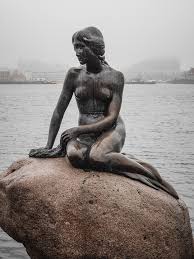
The Mermaid’s Tale

In the classic Hans Christian Anderson tale of the Little Mermaid (not to be confused with its Disneyesque counterpart), the little mermaid forfeits her life under the sea for one on land.  She is promised not only two legs, but also the possibility of an eternal soul should the prince fall in love with her.  She’s warned that if the prince should marry another, she will instantly die of a broken heart and turn to sea foam.

The cost for this promise: Her voice and her ability to sing.

I’ve made this deal.  

In May of 1993 I suffered damage to my vocal chords during a failed external cephalic version (an attempt to turn an upside-down and backwards daughter in utero in order to avoid a c-section).  I screamed throughout the entire process.  I have no idea if the medical folk every regained hearing (I’m a trained soprano)… but I lost three of my four octaves and didn’t claim them again for years.  

Not being able to sing, especially in worship, was emotionally and spiritually painful but the resulting gift of my daughter was worth everything.  I’d do it again in a heartbeat for her.  


Losing my voice to gain a life?  Absolutely, if painful and heart-wrenching.

**

In the original version of the Little Mermaid, the prince marries another.  Just before dawn the next day and her dissolution into seafoam, the mermaid is told that if she kills the prince who betrayed her love with a special knife and allows his blood to drip into the sea, she will regain her mermaid form and will live out her remaining years with her family.  

This too is a familiar choice.

As congregations around the world determine if they will gather in worship, and gather voices in song they are making a similar choice. We can go back to singing, go back to our old forms of worship with one another.  We can ignore the warnings about the effectiveness of singing in spreading the virus and belt out beloved hymns.  We can make the choice to return to the sea in our original form and rejoin our family.

Of course, the difference in our story and that of the little mermaid is we don’t have the option of determining who might die from that choice.

**

In the end, she can’t do it.  Dawn comes, and instead of dissolving into seafoam she is transformed into a Daughter of the Air because of her selflessness.  She is told that if she does good deeds for the next 300 years she will be given an immortal soul and go to heaven.

Now, obviously, this isn’t gospel.  It’s also not Disney.  It does, however, provide a cautionary tale on the choices we make and the sacrifices we may need to consider in order that others might live.

It might be Gospel after all.

We can’t go back.

This is the dangerous time.

If we as a society move too quickly, we’ll need to return to our isolation because the virus has regained a foothold.  This is a dangerous time because we’re itchy to get back to our lives and our jobs and our churches and to get on with all of our plans.  (We’re even willing to go to extremes of personal sacrifice, say, giving up sitting in OUR pews, if only we can come together again.)  We need to move slowly and deliberately even as we deeply desire to reopen our lives.

This is the dangerous time… but not just because we may rekindle the rate of infections and deaths.

This is a dangerous time because we desire to go back to a place and time that no longer exists.

We’re anxious and impatient.  Like the Hebrews fleeing Egypt, we are tired of waiting in lines at Wegmans for manna and want to go back to normal.  We want to go back to Egypt – to what was familiar and known – and we’re bitter and discouraged toward any leadership that suggests we can’t do that tomorrow.

We can’t do that.  Ever.  You know that.  Things cannot be the same. 

I’m not suggesting we are heading to a new Promised Land.  We are, however, heading somewhere new, and there is a promise – but that promise isn’t about the land but about Who is with us.

The church has struggled with the burden of its glorious history and traditions for years.  This is nothing new.  

What is new is that we’ve been the Church without Walls for a few months now and what we really value has become clearer.  We’ve learned a bit about who we really are, as well as what we are not.

What is new is that the needs of the community outside our walls (what walls?) have changed to include extensive unemployment and pervasive trauma. 

What is new is we have discovered that we are far more flexible than we thought, and that this new world needs us to proclaim the transformative love of Jesus Christ in new ways.

Dangerous times indeed… especially if we try to return to what was.

The Parable of the Toaster

I’ve been reading good theologians and social scientists that are urging the global “us” to consider if we want to return to a normal that in many ways is unjust.  In so many ways, “back to normal” runs a parallel course with “great again”, and it ought to give us pause.  Certainly, as we reconstruct our world post-pandemic shouldn’t we make it a place where we pay attention to the effects of climate change as well as systemic racist and make the needed changes?

I’m on board. There’s no need to convince me that this is a turning point for all of us.

And, I’m exhausted.

It’s not just the work of resourcing others (I now wear my Resource Presbyter title with newfound understanding, as well as a amazement at the prescience of the Presbytery!), but multiple levels of grief.  Trauma, which we are suffering on a global scale, requires a tremendous amount of energy.

My body and spirit feel a bit like an old house where I’ve tried to plug in the hair dryer, toaster and coffee maker at the same time.  Ever the Energizer Bunny sort, this is a new experience for me.  I don’t like it one bit.

I also don’t like the idea of simply going back to what was, and pretending that we haven’t seen the impact of corporate greed or the sight of the Andes mountains now that the smog has cleared.

So, what’s someone who is tired of the injustice but also bone-tired to do?

I unplug the toaster: I begin (I think!) by practicing what I preach, and making sure I spend time at deliberate rest.  I return to the Well of the various spiritual disciplines.  I spend time outdoors.  I spend time being creative.

I evaluate if I really need the toaster in the first place: I believe the next steps include starting small…. “let peace begin with me” and all of that.  If I’m not willing to engage in my own audit of how I spend my resources, it becomes much more difficult to ask others to do so. 

I find ways of tapping into the energy of others… as well as sharing what I have so that all might have toast: I need to acknowledge that although my energy is needed toward the rebuilding, it doesn’t rest on me alone.  I need to seek out those who share similar vision (as well as those who poke me a bit!).  I also need to lean in a bit on the Source of all that energy.  

How are you planning on finding the energy to do what is just and right?

So What?

During this season of exile from the ordinary activities that define us ‘church’, we’ve scrambled to become adept at camera angles and green screens.  For many, much has remained the same, it’s just the trappings that have changed.  We’re finding new patterns and traditions.  We find ourselves adapting, even as we long to get back to normal.

Is that what we should be longing for?  

Actual Desk Footage!

Is that God’s desire… that we go back to what was?

Decades ago I took the advice of preaching professor Fred Craddock and crafted a small sign for my desk out of an index card.  I’ve never made a permanent sign… it’s always been my generally unreadable scrawl on a scrap of paper or a post it note. Every so often it will fall and get lost in the shuffle of my desk, but I’ve never been tempted to make it permanent.  There is something about realizing it has gone missing and then recreating it… somehow ritually rededicating myself to its exhortation in doing so.

In two words it provides me a much-needed focus for my own sermon work.  It simply reads:  So what?  Useful for the preacher, but it’s also become a bit of a mantra for the rest of my life as well.  

This global pandemic is a grand “so what?” moment for the church (the effects will last far longer than a moment) especially if we ask this question not of ourselves, but of God.

Things will never be the same, nor should they.  

What happens next in our churches, communities and in our own lives should be based not on what was normal for us, but rather on discerning where God is calling us now as those who bear witness to the transformative love of Jesus Christ.

Blessings –

Karen

Plate-spinning

I think the first time I ever saw plate-spinning was on the Mike Douglas show.  (Hush, I know I’m old).  I was convinced there was some sort of gimmick – perhaps a small nail that protruded from the stick into the plate? – that allowed multiple plates to be spun at the same time.

When I got a bit older I learned this was called “adulting”.

Congregational leaders have not only needed to learn new technology and language (zoombombing anyone?) in order for folks to still gather for worship but there are several other plates they’ve needed to keep spinning over the last month.  Church leaders have learned how to grieve with families who have lost loved ones (or employment, or dreams) via the phone.  They’ve studied the intricacies of the CARES act and have had debates about the ethics of such.  They’ve searched for ways to connect beyond physical coffee hour and years-old phone trees.

Those plates?  Worship, Congregational Care and Finance? They are spinning like crazy.

The name of the fourth plate is “Unknown” and it represents all the anxiety and hope and worry and concern about what comes next for the church.  We claim to know Whose we are… but who are we now that we are not the church on the corner that is known for their choir, great preaching and peach preserves?

These are the four plates the church will be spinning for the foreseeable future.  

The good news is that these are four plates, and not the four horsemen.  This is not the end of the Church, although it may be the end of the church we have known.  

The good news is we are finding that we are so much more adaptive than we could have dreamed and that we have creativity and persistence cropping up in the most unlikely ways and places.  

The good news is that we aren’t doing this alone.  We have each other (what an incredible time to be the connectional church!) and we have our God.  

What is the sound of four plates spinning?  For me, at least today, it sounds like hope.