
I’m working from the library this morning. I set up near the windows, the sun’s warmth a decent tradeoff for diminished screen visibility. I came seeking quiet.
Soon after I settled in, two people walked in. The first was a woman carrying a laptop, but she was followed by a man in a bright orange vest who muttered under his breath something about presidential powers. He asked her twice for her name (was she a volunteer or hired to accompany him?), and then stated he was going to look for books.
His breathing was ragged and he struggled to keep balance. On his way back to their section, loaded with armfuls of books, his grip loosened and the books fell to the floor. She immediately got up to help him, picking up the fallen texts but also reassuring him with a smile and words of assurance before leading him back to their chairs. He sat, obviously still rattled by the accident, his breath coming in short loud bursts. She sat with him saying nothing and I watched as his breathing slowly returned to a normal rate. She breathed kindness with him.
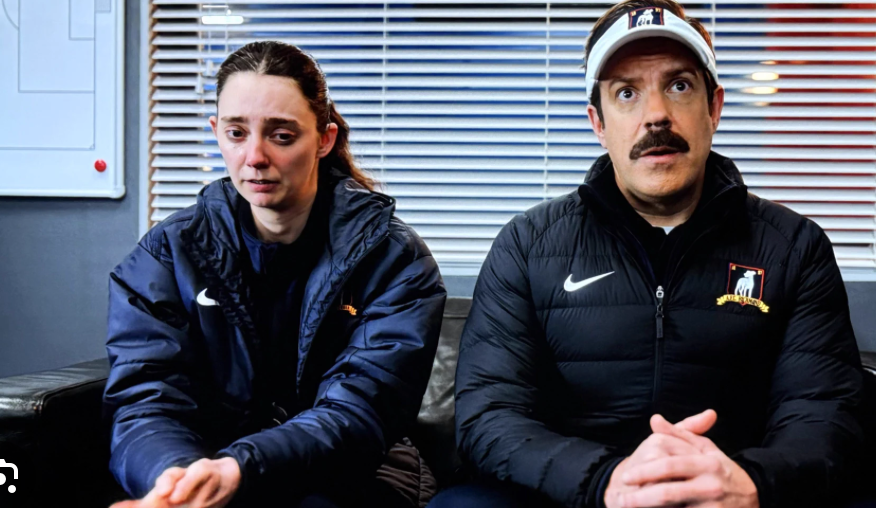
I’ve not watched the most recent season of Ted Lasso, but I’ve seen numerous clips of the “breathing scene” where the protagonist asks the female coach if he might sit next to her as she weeps. What follows is a masters class in his own ability to self-regulate and how his presence helps her to find her own stability. I wonder if it is such quotable material not only because it is well-executed but also because it’s something many of us have not experienced. And yet, here it is.
As we approach the midterm elections I’ve been bombarded with financial requests from candidates I do not know. The headlines feature growing inflation, concerns about the impact of super El Niño, and worries about the availability of fertilizer for next year’s crops. Palestine, Ukraine, and Jane Doe all deserve my attention, compassion and action. I crave peace.
Ted Lasso and the Library Woman remind us that self-regulation and sitting shiva are valid responses to a world gone amok. Taking time to breathe is not avoidance of the world’s trauma but rather a necessary reset. It’s no accident that the word for breath in the Hebrew Scriptures (ruach) also refers to the presence of God.
Perhaps I’m not seeking quiet but a place to breathe.

